
Why Global Luxury Investors Are Expanding Beyond Traditional Coastal Markets
Approximate Reading Time: 6 minutes
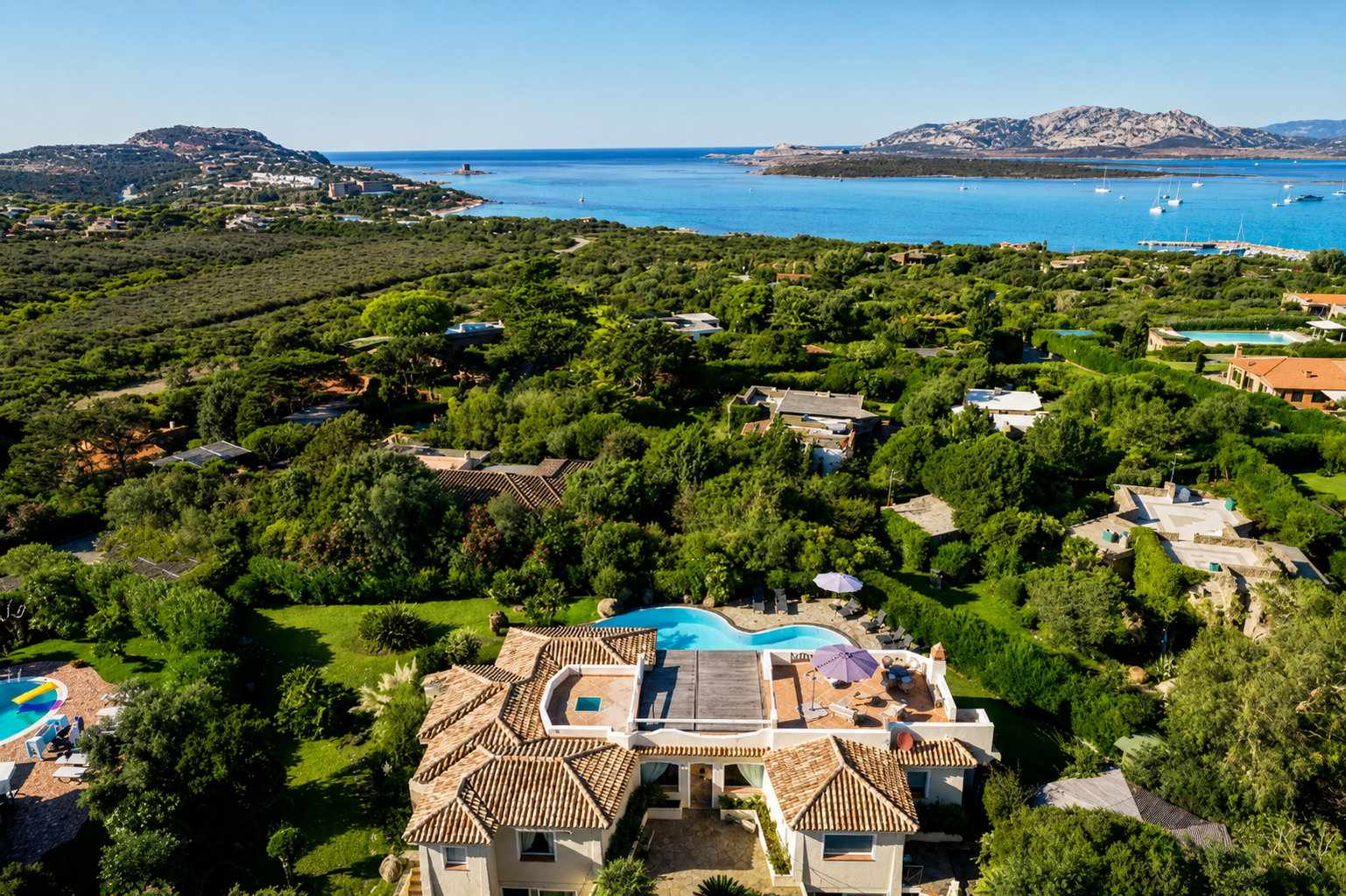
Explore why global investors are shifting toward luxury investment destinations in Asia, from Phuket and Bali to emerging Philippine coastal hospitality markets focused on experiential tourism and hospitality oriented development concepts.
Table of Contents
The Rise of Lifestyle-Led Luxury Investment Destinations in Asia
Why Ultra-HNW Buyers Are Prioritizing Lifestyle Markets
The Coastal Markets Capturing Global Luxury Attention
Thailand
Indonesia
United Arab Emirates
Europe
Emerging Asian Markets
Why Emerging Philippine Destinations Are Entering the Conversation
The Growing Appeal of Hospitality-Focused Villa Developments
The Future of Luxury Real Estate May Be More Experiential Than Urban
FAQs
How Does Professional Property Management Typically Work In A Hospitality-Focused Villa Development?
What Is The Typical Entry Point For Participating In An Off-Plan Villa Development Concept In An Emerging Market?
How Are Rental Returns Typically Calculated In Hospitality-Focused Villa Developments?
Why Are Emerging Coastal Markets Gaining Attention Among Global Hospitality Investors?
Explore Hospitality-Focused Villa Development Concepts in Emerging Coastal Markets
The Rise of Lifestyle-Led Luxury Investment Destinations in Asia

Aerial view of lush tropical islands surrounded by turquoise waters in Southeast Asia, representing emerging coastal luxury investment destinations in Asia
There was a time when luxury investment conversations were centered almost entirely around major urban hubs. Cities known for financial activity, branded developments, and international visibility often dominated the discussion. Today, that conversation appears to be evolving. More global investors are beginning to look beyond traditional city centered markets and toward destinations shaped by tourism, hospitality infrastructure, and long term commercial relevance.
Across Asia, several coastal regions are becoming part of broader luxury investment discussions. Destinations such as Phuket and Bali continue gaining attention for their established tourism ecosystems, international accessibility, and hospitality oriented developments. At the same time, emerging luxury property markets in other parts of Southeast Asia are also entering the conversation as investors explore new environments connected to experiential tourism and guest focused accommodation.
What makes this shift notable is that investors are no longer comparing opportunities within a single country alone. Increasingly, coastal luxury investment markets are being evaluated on a regional and global level. Tourism demand, airport connectivity, hospitality infrastructure, operational flexibility, and overall guest experience are becoming part of the same discussion. A destination in Southeast Asia may now be considered alongside markets in the Middle East or Southern Europe depending on the type of hospitality concept being explored.
This change has also contributed to growing interest in hospitality focused commercial assets rather than purely urban developments. In many cases, investors appear to be paying closer attention to destinations that combine tourism activity with privacy, curated experiences, and expanding infrastructure. As a result, luxury investment destinations in Asia are increasingly viewed through the lens of long term tourism potential and hospitality driven development.
Within this broader movement, the Philippines is gradually becoming more visible among emerging coastal markets in the region. Several tourism oriented destinations are gaining attention for their natural landscapes, improving accessibility, and growing hospitality sector. These areas are also contributing to wider conversations surrounding luxury coastal development opportunities, particularly those connected to commercial villa units for short term stays and hospitality focused accommodation concepts.
As global tourism patterns continue evolving, experiential luxury destinations across Asia are becoming part of a much larger investment narrative. The conversation is no longer focused solely on prestige or skyline visibility. Increasingly, it is about how destinations function within modern hospitality ecosystems, how they support tourism activity, and how developers position projects within a changing regional landscape.
Why Ultra-HNW Buyers Are Prioritizing Lifestyle Markets

Traditional longtail boats navigating crystal clear turquoise waters between dramatic limestone cliffs in Southeast Asia.
Luxury investment conversations have changed significantly in recent years. Many global investors are now looking beyond traditional urban centers and paying closer attention to destinations connected to tourism demand, hospitality infrastructure, and curated guest experiences. Across Asia, several coastal luxury investment markets are becoming part of broader international discussions as tourism patterns continue evolving.
Part of this shift comes from changing preferences within the hospitality sector. Investors are increasingly exploring destinations that offer:
Lower density tourism environments
Privacy oriented guest accommodation concepts
Marine tourism and outdoor experiences
Wellness and eco tourism activities
Strong regional accessibility and airport connectivity
Expanding hospitality infrastructure
Destinations such as Phuket and Bali continue gaining attention because they combine tourism activity with hospitality oriented development. These experiential luxury destinations are increasingly viewed as part of a wider regional hospitality landscape rather than seasonal tourism markets alone.
Another factor influencing investor interest is the growing visibility of hospitality focused accommodation concepts across emerging luxury property markets. In many tourism led destinations, developers are exploring commercial villa developments designed around guest use, operational flexibility, and curated hospitality experiences.
These villa developments are designed as hospitality focused commercial assets, not residential housing. Increasingly, hospitality oriented projects are being positioned around:
Short term guest accommodation
Tourism driven operations
Wellness focused experiences
Hospitality services and amenities
Commercial relevance within tourism ecosystems
Accessibility also continues shaping luxury coastal development opportunities across Asia. International flight connectivity, expanding tourism infrastructure, and proximity to established visitor destinations remain important considerations for investors monitoring long term tourism activity.
As global hospitality demand continues evolving, investors are increasingly comparing destinations on a regional and international level. The conversation is no longer focused only on major urban hubs. Increasingly, attention is shifting toward hospitality markets that combine tourism growth, curated guest experiences, and commercial development potential within Asia’s growing tourism economy.
The Coastal Markets Capturing Global Luxury Attention
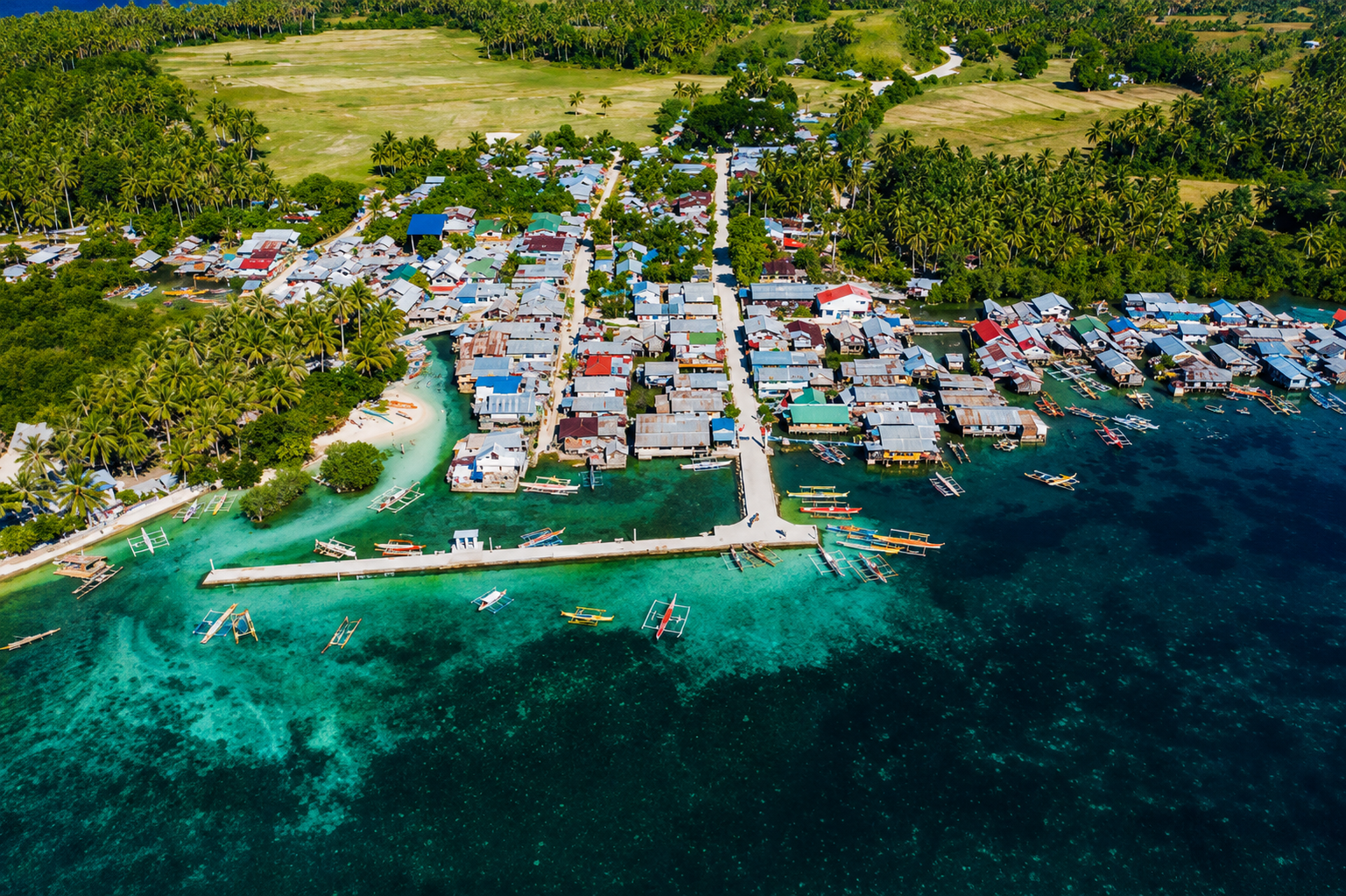
Aerial view of a coastal village in the Philippines surrounded by clear turquoise waters and lush tropical vegetation.
Luxury investment destinations in Asia are no longer being viewed in isolation. Today, investors often compare tourism markets across different regions based on hospitality infrastructure, accessibility, guest experience, and long term tourism activity. Some destinations are already well established within global hospitality conversations, while others are gradually gaining visibility as emerging coastal markets.
Thailand
Thailand has long been one of the most referenced coastal luxury investment markets in Asia, and for good reason. Phuket built its reputation over decades, developing a hospitality ecosystem that now includes everything from ultra-luxury resort brands to independently operated villa concepts with strong short-term rental demand. The infrastructure is mature, the international tourist profile is well-established, and the market has demonstrated consistent commercial relevance across multiple tourism cycles.
Koh Samui follows a similar trajectory, though at a slightly smaller scale. It has developed a distinct identity around boutique hospitality and wellness-oriented guest experiences, attracting a traveler segment that tends to spend well and return often. Both destinations represent what a fully developed coastal luxury market looks like when tourism infrastructure and hospitality demand grow together over time.
Indonesia
Bali is perhaps the most globally recognized experiential luxury destination in Southeast Asia. Its appeal cuts across traveler segments, from wellness tourism and cultural immersion to surf culture and high-end hospitality. What makes Bali commercially interesting from an investment perspective is not just its popularity, it is the depth and diversity of that popularity. The destination draws consistent international visitor volume from a wide range of source markets, which tends to support occupancy across seasons.
Hospitality-integrated developments in Bali have become increasingly sophisticated, reflecting the maturity of the market and the expectations of the guest profile it attracts. For investors studying coastal luxury development opportunities in Asia, Bali remains one of the most closely watched reference points.
United Arab Emirates
Dubai occupies a different position in this conversation. It is not a coastal destination in the traditional sense, but it has become one of the most globally visible luxury hospitality markets in the world. Its infrastructure is world-class, its international investor familiarity is unmatched, and the branded development ecosystem it has built is a case study in how deliberate positioning can shape a market's identity over time.
What Dubai represents for this discussion is the high end of urban luxury hospitality, a market where prestige, global connectivity, and commercial infrastructure have converged at scale. Investors who are familiar with Dubai understand the benchmark it sets, and increasingly, they are using that benchmark to evaluate what emerging coastal markets might look like as they develop their own hospitality identities.
Europe
The Algarve in Portugal and the Costa del Sol in Spain have been part of the luxury coastal investment conversation for far longer than most Asian markets. These are mature, well-documented hospitality destinations with decades of international tourism activity behind them. Resort-based investment models are well understood here, and the guest demand profile, largely European with strong international overlap, has proven commercially durable across long time horizons.
What these markets offer the broader conversation is a sense of what longevity looks like in a luxury coastal context. They are useful reference points for understanding how hospitality infrastructure develops, how tourism demand sustains itself, and how guest-use commercial assets perform across different market cycles.
Emerging Asian Markets
A cluster of destinations across Asia is gaining increasing international visibility, and the profile they share looks familiar to anyone who studied Phuket or Bali in their earlier stages.
Da Nang in Vietnam has been building its tourism infrastructure steadily, attracting international resort brands and growing its appeal among both regional and long-haul travelers. Palawan in the Philippines has earned a strong reputation among luxury travelers seeking natural environments and privacy-oriented guest experiences, and its profile within global tourism conversations has been rising consistently.
And then there is Siargao. It is the market that keeps appearing in conversations about where serious hospitality-focused attention is moving next in Southeast Asia. Its natural environment, surf culture, and growing international tourism visibility have positioned it as one of the more closely watched emerging luxury property markets in the region. Hospitality-focused accommodation concepts are attracting increasing interest here, particularly among investors who understand that the most commercially significant moments in a market's development tend to come before the story becomes widely known.
These emerging markets are not being discussed as alternatives to the established destinations. They are being discussed as part of the same global conversation, increasingly viewed as the next chapter in the broader story of coastal luxury investment in Asia.
Curious about how hospitality-focused villa development concepts are being structured in emerging coastal markets like Siargao?
Why Emerging Philippine Destinations Are Entering the Conversation
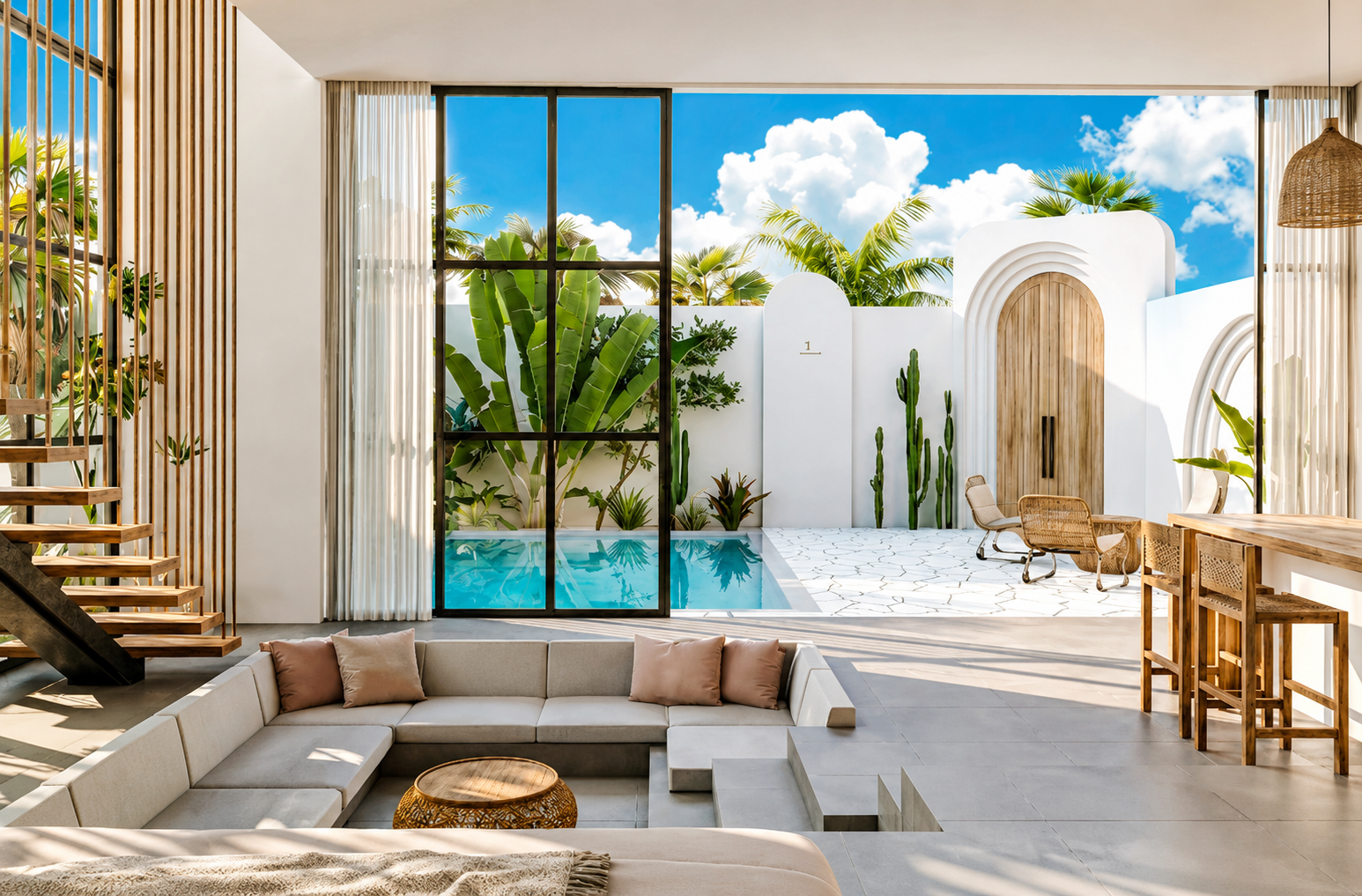
Modern tropical villa featuring open plan design, floor to ceiling glass panels, private pool courtyard, and natural wood finishes.
In recent years, the Philippines has gradually become part of wider discussions surrounding luxury investment destinations in Asia. While markets such as Phuket and Bali remain more established within the regional hospitality sector, several Philippine destinations are beginning to attract attention for their tourism potential, natural landscapes, and expanding infrastructure.
Part of this growing visibility comes from the country’s diverse coastal and island destinations. Locations such as Palawan, Siargao, Cebu, and Davao are increasingly entering regional hospitality investment discussions because of their tourism activity and evolving development landscape.
Several factors are contributing to this shift, including:
Expanding airport and tourism infrastructure
Growing international tourism visibility
Rising interest in island and coastal destinations
Demand for lower density hospitality environments
Increased attention toward wellness and marine tourism
Broader interest in experiential luxury destinations
Compared to some mature coastal markets, certain Philippine destinations remain relatively early in their tourism development cycle. For many investors and developers, this creates interest in how these markets may evolve as hospitality infrastructure continues expanding across the region.
Hospitality focused villa concepts are also becoming more visible in selected tourism areas throughout the country. Rather than functioning as residential projects, many of these developments are being positioned around guest use, hospitality services, and tourism oriented operations. These villa developments are designed as hospitality focused commercial assets, not residential housing.
Another factor shaping interest in the Philippines is the appeal of destinations that feel connected to nature and tourism experiences without the density often associated with larger urban hospitality markets. In several coastal regions, boutique hospitality concepts, curated guest experiences, and commercial villa units for short term stays are becoming part of broader tourism development conversations.
Timing also plays an important role in emerging hospitality markets. Established destinations often benefit from mature tourism ecosystems, while earlier stage markets may attract attention because they are still evolving within the regional hospitality landscape. This is one reason the Philippines is increasingly being viewed as part of broader discussions surrounding luxury coastal development opportunities across Southeast Asia.
As international tourism patterns continue shifting toward experience driven travel, the country’s hospitality sector is gradually becoming more visible within regional investment conversations. Increasingly, developers and investors are exploring how tourism oriented destinations in the Philippines may contribute to the next phase of hospitality focused growth across Asia.
Want to know more about how hospitality-focused commercial developments are being structured in emerging Philippine tourism destinations like Siargao?
The Growing Appeal of Hospitality-Focused Villa Developments
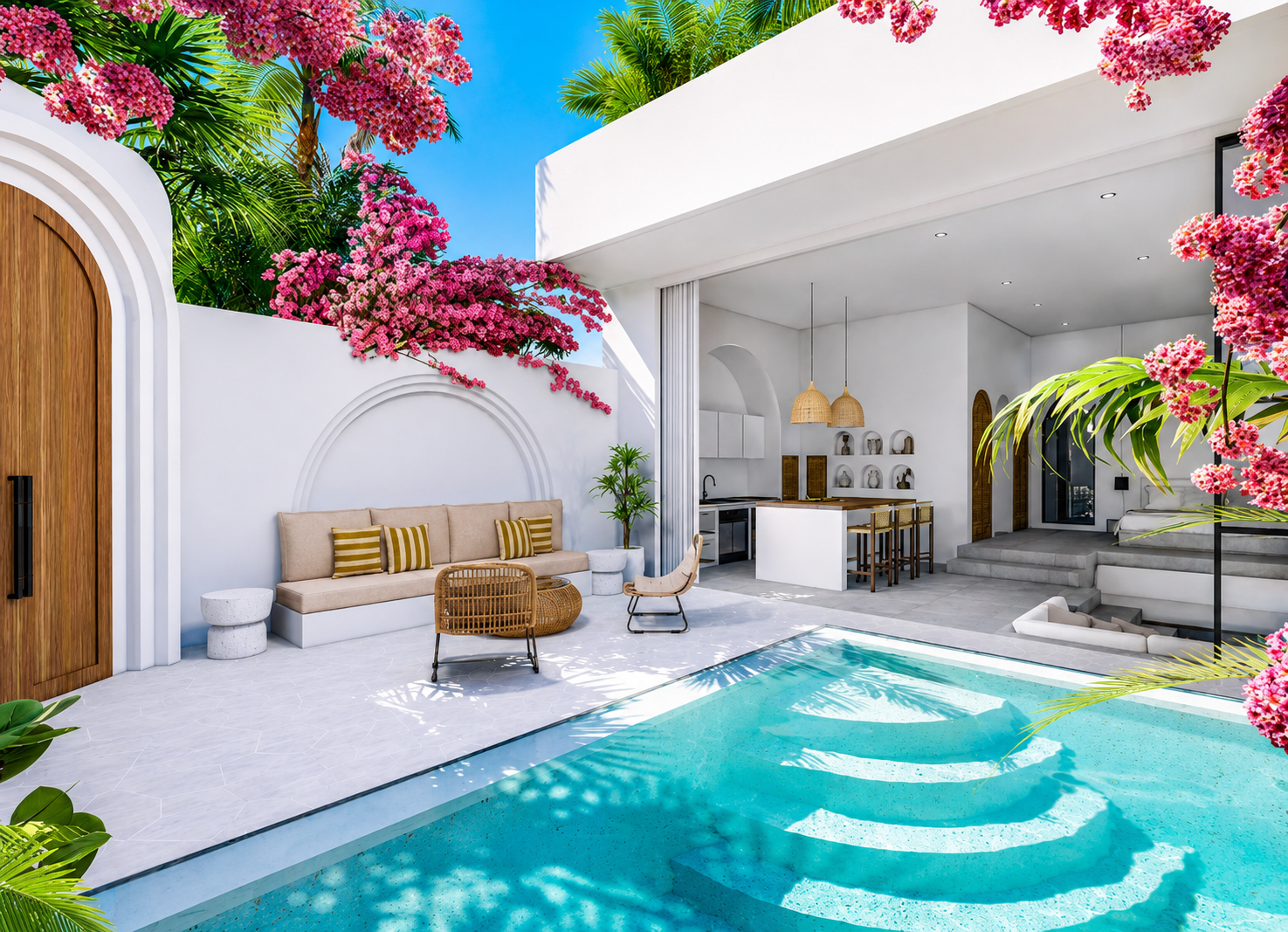
Outdoor courtyard of a boutique tropical villa featuring a private pool, open plan kitchen and guest seating areas, white rendered walls, natural rattan furnishings, and flowering tropical trees
As tourism markets continue evolving across Asia, hospitality focused villa developments are becoming more visible within broader conversations surrounding experiential tourism and coastal development opportunities. In many destinations, developers are no longer focusing only on large scale resort environments. Increasingly, there is growing interest in boutique hospitality concepts that combine curated guest experiences with tourism oriented operations.
Part of this shift comes from changing hospitality demand. Many travelers are now looking for accommodation experiences that feel more connected to nature, wellness, privacy, and local tourism activity. As a result, commercial villa units for short term stays are becoming part of broader hospitality strategies across several emerging luxury property markets.
These hospitality oriented concepts often include:
Guest focused accommodation environments
Wellness oriented design elements
Resort style amenities within smaller scale developments
Marine and eco tourism accessibility
Architecture designed around tourism experiences
Flexible hospitality operations
In destinations throughout Southeast Asia, developers are exploring hospitality focused villa concepts in tourism led markets where visitor demand continues evolving. These projects are increasingly positioned within areas connected to island tourism, coastal experiences, and hospitality infrastructure growth.
Importantly, these villa developments are designed as hospitality focused commercial assets, not residential housing. Their role within the tourism sector is centered around guest use, hospitality services, and operational integration within broader tourism ecosystems.
This broader hospitality movement is also contributing to the visibility of developers participating in emerging coastal development conversations across the Philippines. Companies such as Dolce Development Group are becoming part of these discussions through villa development concepts aligned with tourism oriented environments and evolving hospitality demand.
Rather than positioning projects purely around traditional luxury real estate models, many hospitality oriented developments are increasingly being framed around experience, tourism accessibility, and commercial relevance within growing hospitality markets. This approach reflects wider regional trends seen across several luxury investment destinations in Asia, where experiential tourism continues shaping how hospitality projects are planned and positioned.
As tourism infrastructure expands across emerging coastal markets, hospitality focused commercial assets may continue gaining attention among investors monitoring long term tourism activity in the region. Increasingly, the conversation is not only about location alone, but also about how hospitality concepts integrate with tourism demand, guest experience, and the evolving expectations of international travelers.
Interested in how boutique hospitality villa concepts are being structured and operated in emerging coastal tourism destinations?
The Future of Luxury Real Estate May Be More Experiential Than Urban

Private pool garden of a boutique tropical villa featuring cascading bougainvillea, mature palm trees, banana leaf plants, and a serene lap pool with outdoor guest seating
Luxury investment conversations are continuing to evolve across global hospitality markets. While major urban destinations remain important within international tourism and commercial activity, there is also growing attention toward experiential luxury destinations connected to coastal tourism, wellness experiences, and hospitality focused development.
Across Asia and other international regions, investors are increasingly exploring destinations shaped by tourism infrastructure, accessibility, and curated guest experiences. Markets once viewed primarily through the lens of seasonal tourism are gradually becoming part of broader discussions surrounding long term hospitality relevance and commercial opportunity.
This shift is also contributing to the continued diversification of coastal luxury investment markets. Established destinations such as Phuket and Bali remain influential within the regional hospitality sector, while emerging markets across the Philippines are gradually entering wider investment conversations. As tourism infrastructure continues expanding, destinations such as Palawan and Siargao are becoming more visible within discussions surrounding luxury coastal development opportunities in Southeast Asia.
At the same time, hospitality focused development concepts are becoming increasingly visible across the region. Developers are exploring projects designed around guest use, operational flexibility, and tourism oriented experiences rather than traditional residential models. These villa developments are designed as hospitality focused commercial assets, not residential housing.
As global hospitality preferences continue evolving, emerging coastal destinations may play a larger role in future investment discussions. Increasingly, investors are evaluating markets not only by visibility or scale, but also by how hospitality concepts connect with tourism demand, guest experience, and long term regional development trends.
Interested in learning how hospitality focused villa development concepts are becoming part of emerging coastal tourism markets in the Philippines?
FAQs
How Does Professional Property Management Typically Work In A Hospitality-Focused Villa Development?
In fully managed hospitality concepts, a dedicated property management team handles guest bookings, property maintenance, cleaning, and day-to-day operations on behalf of the investor. This structure is designed to reduce the operational burden on the investor while keeping the asset generating commercial activity.
What Is The Typical Entry Point For Participating In An Off-Plan Villa Development Concept In An Emerging Market?
Entry points vary significantly depending on the destination, development scale, and stage of the project. Off-plan participation generally offers earlier pricing compared to completed developments, though specific figures should always be confirmed directly with the developer.
How Are Rental Returns Typically Calculated In Hospitality-Focused Villa Developments?
Rental return projections are generally based on estimated occupancy rates, average nightly guest rates, and operational costs. These figures are projections rather than guarantees, and actual performance will depend on tourism demand, property management quality, and broader market conditions at the time.
Why Are Emerging Coastal Markets Gaining Attention Among Global Hospitality Investors?
Many emerging coastal markets are attracting attention because of expanding tourism infrastructure, increasing international visibility, and growing demand for curated hospitality experiences. Investors are increasingly exploring destinations connected to long term tourism activity and evolving guest preferences.
Explore Hospitality-Focused Villa Development Concepts in Emerging Coastal Markets
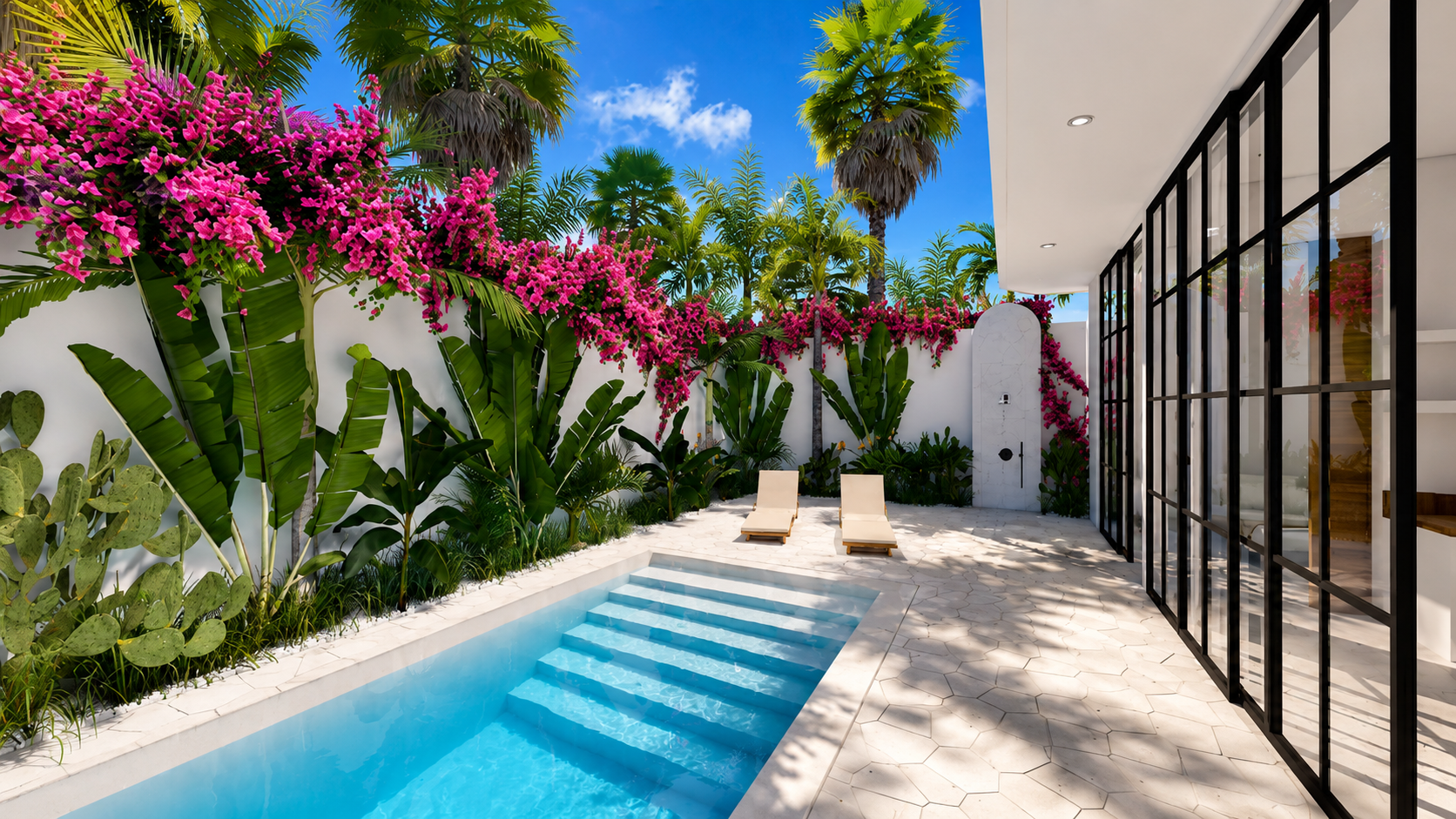
Pool terrace of a boutique tropical villa featuring stepped pool entry, sun loungers, floor to ceiling steel framed glass panels, cascading bougainvillea, and lush tropical garden planting
Across Asia, hospitality markets continue evolving as tourism demand, infrastructure growth, and guest experience expectations shape the future of coastal development. As more emerging destinations enter broader regional conversations, hospitality oriented projects are becoming increasingly visible within tourism driven environments.
In the Philippines, several coastal regions are gradually gaining attention for hospitality focused accommodation concepts connected to tourism activity, wellness experiences, and curated guest environments. These developments are designed around commercial hospitality use and operational flexibility rather than traditional residential models.
At Dolce Development Group, the focus remains on villa development concepts aligned with evolving tourism trends and emerging coastal market discussions. These villa developments are designed as hospitality focused commercial assets, not residential housing.
Whether you are exploring experiential luxury destinations, monitoring emerging luxury property markets, or learning more about hospitality oriented development structures, the conversation surrounding coastal tourism opportunities across the Philippines continues evolving alongside broader regional hospitality trends.
Curious about how hospitality focused villa development concepts are being positioned within emerging tourism markets in the Philippines?
