
Why Investors Are Moving Beyond Metro Manila Into High-Growth Tourism Markets
Approximately Reading Time: 6 minutes

Explore why tourism real estate investment in the Philippines is gaining attention as investors look beyond Metro Manila toward destinations shaped by travel demand, hospitality growth, and long term market potential.
Table of Contents
Why Metro Manila Is No Longer the Only Focus for Property Investors
The Rise of Tourism Driven Property Markets in the Philippines
Why High Growth Tourism Markets Are Gaining Investor Attention
Stronger Domestic And International Travel Interest
Limited Supply Of Well Positioned Hospitality Focused Developments
Infrastructure Improvements In Emerging Destinations
Demand For Professionally Managed Guest Use Properties
Potential For Long Term Destination Growth
Investor Interest In Commercial Villa Units For Short Term Stays
Siargao As An Emerging Tourism Led Investment Market
The Shift Toward Hospitality Focused Commercial Assets
What Investors Should Consider Before Entering Tourism Real Estate Markets
Are Tourism Markets the Future of Real Estate Investment in the Philippines?
FAQs
Why Is Professional Management Important For Guest Use Properties?
What Role Does Design Play In Hospitality Focused Villa Development Concepts?
Why Is Siargao Gaining Attention In Tourism Real Estate Discussions?
What Should Investors Avoid When Studying Tourism Real Estate Investment In The Philippines?
Exploring Tourism Driven Property Opportunities In The Philippines?
Why Metro Manila Is No Longer the Only Focus for Property Investors

An aerial view of a quiet road passing through lush coconut palm landscapes in Siargao
For many years, Metro Manila has been one of the most familiar places to look at when talking about real estate investment in the Philippines. It remains a major commercial and property hub, supported by business activity, infrastructure, and a large urban market.
But as the property landscape continues to evolve, investors are also beginning to look at what exists beyond the capital. This does not mean moving away from Metro Manila entirely. Instead, it reflects a wider investment lens, where different locations are being evaluated for different reasons.
For some investors, looking beyond the capital allows them to study:
Different pricing structures compared to dense city markets
New areas supported by tourism and infrastructure activity
Opportunities that may offer a more distinct market position
Locations where hospitality focused accommodation is becoming more relevant
Long term destination potential outside traditional urban centers
Metro Manila continues to play a central role in Philippine real estate, but it is no longer the only location being evaluated by investors. In a highly active city market, factors such as price sensitivity, competition, and limited differentiation can encourage investors to explore other property models.
This is where provincial and tourism driven locations are becoming part of the Philippines property investment conversation. Rather than looking only at city based assets, some investors are now comparing how urban markets and destination markets perform under different conditions.
In this sense, the shift beyond Metro Manila is not about replacing the capital. It is about understanding how real estate investment in the Philippines can include a broader range of markets, from established urban centers to emerging destinations shaped by travel demand, hospitality activity, and long term positioning.
The Rise of Tourism Driven Property Markets in the Philippines
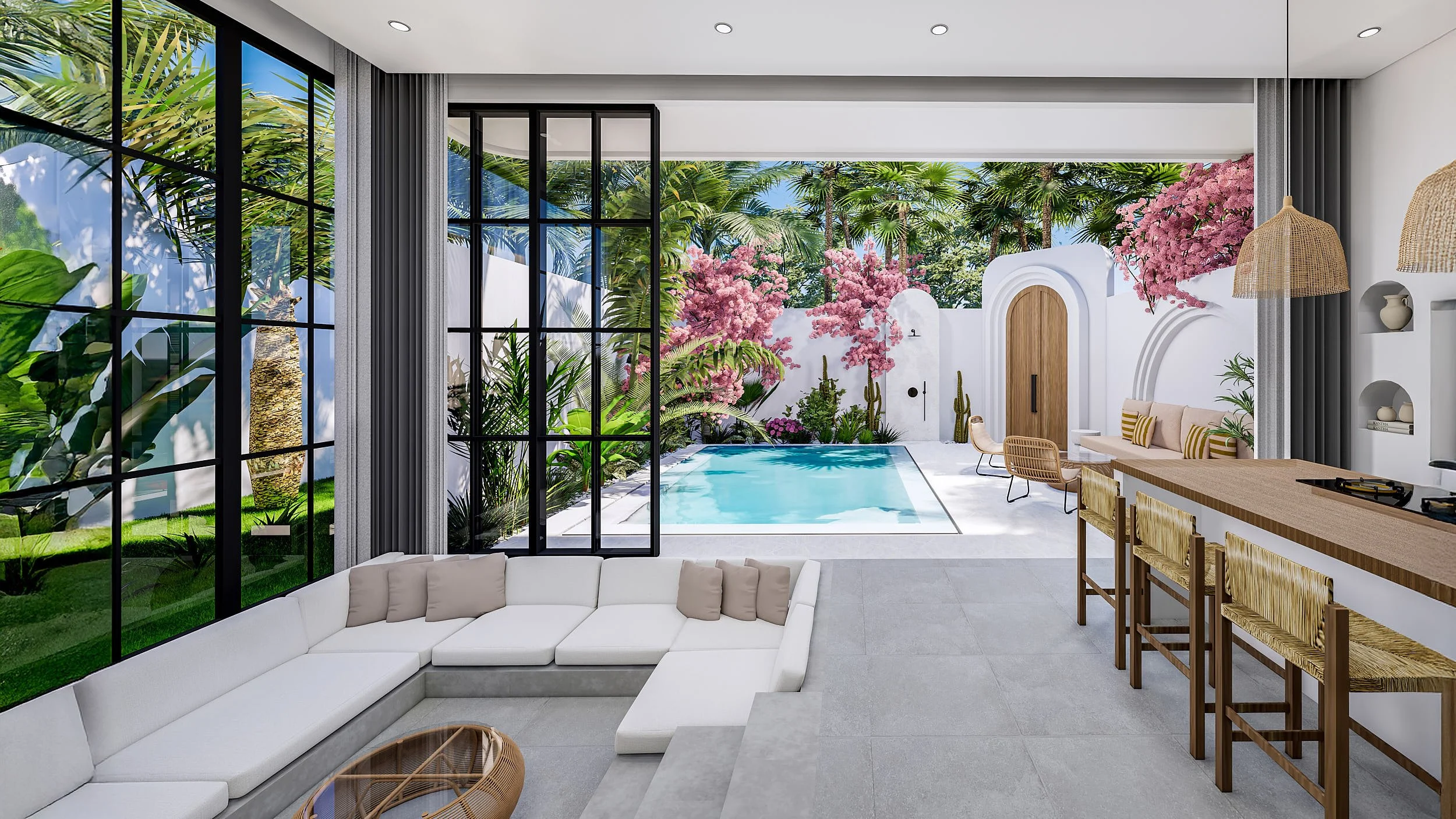
A modern villa development concept featuring an open lounge, pool area, and tropical design elements
A modern villa development concept featuring an open lounge, pool area, and tropical design elements
If you look at how property conversations in the Philippines are evolving, you may notice that more attention is gradually moving beyond traditional city locations. While Metro Manila remains a key part of the market, some investors are beginning to explore destinations shaped by tourism activity and visitor demand.
This shift is closely linked to how travel patterns influence property use. As more destinations welcome consistent visitor traffic, the need for hospitality focused accommodation becomes more visible. This is where tourism real estate investment in the Philippines begins to enter the conversation.
In tourism driven locations, property is often viewed differently. Instead of focusing only on long term occupancy, investors may look at how a destination performs as a hospitality market.
Tourism driven areas are becoming an attractive option for investors studying long term demand. Locations supported by visitor activity may create opportunities for hospitality focused property concepts that align with how people travel today.
At the same time, it is important to understand that these markets offer a different investment profile. Factors such as seasonality, destination growth, and project structure all play a role in how opportunities are evaluated. This is why hospitality real estate in the Philippines is often approached with a broader, more careful perspective.
Within this space, villa development concepts are increasingly positioned as part of a larger hospitality ecosystem. These villa developments are designed as hospitality focused commercial assets, not residential housing. They are intended to function as guest use properties, contributing to the accommodation landscape of a destination.
As the market continues to evolve, tourism driven destinations are gaining attention from investors who are expanding how they approach Philippines property investment, looking beyond traditional urban real estate and into markets shaped by travel, demand, and long term destination potential.
Want to explore how hospitality focused developments are being structured in emerging destinations like Siargao?
Why High Growth Tourism Markets Are Gaining Investor Attention

An aerial view of a coastal community with clear waters, boats, and surrounding greenery
As you look deeper into tourism driven locations, one question naturally comes up. Why are more investors starting to pay attention to these markets?
Several factors may explain why high growth tourism markets are gaining attention from investors. Rather than focusing only on land or unit ownership, many are now studying how a destination performs as a hospitality market. This shift is also shaping how tourism real estate investment in the Philippines is being evaluated today.
Here are some of the key reasons behind this growing interest:
Stronger Domestic And International Travel Interest
Travel activity continues to play an important role in shaping demand. As more local and international visitors explore destinations across the country, the need for well planned hospitality focused accommodation becomes more visible. For investors, this creates an opportunity to study how consistent visitor demand may influence property performance over time.
Limited Supply Of Well Positioned Hospitality Focused Developments
In many tourism destinations, the number of well planned developments remains relatively limited. This is especially true for projects that are designed with a clear hospitality approach. As a result, investors are beginning to look more closely at villa development concepts that are carefully positioned within the local market.
Infrastructure Improvements In Emerging Destinations
Access plays a key role in how a destination evolves. Improvements in roads, airports, and essential services can gradually make certain areas more accessible to visitors. As infrastructure develops, some investors begin to assess how these changes may support long term tourism activity and broader real estate investment in the Philippines.
Demand For Professionally Managed Guest Use Properties
Not all properties are structured the same way. In tourism markets, there is growing attention on developments that are supported by professional management. Guest use properties that are properly maintained and operated can offer a more consistent experience for visitors, which is an important consideration for investors studying hospitality real estate in the Philippines.
Potential For Long Term Destination Growth
Tourism driven locations are often evaluated based on how they may develop over time. Factors such as branding, visitor experience, and overall destination planning can influence how a market matures. While outcomes can vary, some investors are drawn to locations that show signs of steady tourism activity and long term potential.
Investor Interest In Commercial Villa Units For Short Term Stays
There is also growing curiosity around commercial villa units for short term stays. These are not residential properties, but part of a broader hospitality concept. Professionally planned villa development concepts can offer a different structure from traditional residential property investments, especially for those looking to align with tourism driven demand.
Taken together, these factors highlight a broader shift in perspective. Instead of looking at property as a standalone asset, investors are increasingly viewing it as part of a larger hospitality environment. This is one of the reasons why high growth tourism markets continue gaining attention within the evolving landscape of tourism real estate investment in the Philippines.
Curious how tourism driven developments are structured in emerging destinations like Siargao?
Siargao As An Emerging Tourism Led Investment Market

A tropical villa development concept with a pool, outdoor lounge area, and modern architectural details
If you follow the conversation around tourism driven destinations in the Philippines, one location that often comes up is Siargao Island. Known for its natural appeal and growing visibility among travelers, it has gradually become a place that investors are starting to observe more closely.
Siargao has become one of the Philippine destinations gaining attention from investors studying tourism led real estate opportunities. As interest in tourism real estate investment in the Philippines expands, locations like Siargao are becoming part of that broader discussion.
Some of the reasons why Siargao is gaining attention include:
Growing visibility as a tourism destination among local and international travelers
Concentrated hospitality activity in areas like General Luna
Limited availability of well positioned land in key locations
Increasing interest in hospitality focused accommodation and guest use properties
Ongoing observation of how infrastructure and accessibility may support tourism activity
For investors evaluating Siargao real estate investment, the focus is often on how these factors come together within a specific location. Rather than viewing property through a residential lens, the emphasis is placed on guest demand, development quality, and long term destination positioning.
In this context, villa development concepts in Siargao may appeal to investors looking at hospitality focused commercial assets rather than residential housing. These villa developments are designed as hospitality focused commercial assets, not residential housing. They are positioned as guest use properties, forming part of a broader offering of commercial villa units for short term stays.
As tourism continues to shape how destinations like Siargao evolve, the island is gradually becoming part of a wider conversation around hospitality real estate in the Philippines. For some investors, it represents an opportunity to study how travel demand, location, and development planning come together in a growing tourism market.
Interested in understanding how villa development concepts are positioned within Siargao’s tourism market?
The Shift Toward Hospitality Focused Commercial Assets

An aerial view of Siargao’s coastline, blue waters, and tropical greenery, reflecting the natural setting that supports tourism activity
As you explore tourism driven markets, you may start to notice a shift in how properties are being viewed. It is no longer just about ownership. More investors are beginning to look at how a property functions within a hospitality environment.
In the context of tourism real estate investment in the Philippines, this means moving beyond the idea of traditional property use and focusing on how developments are designed to serve guest demand. Instead of residential formats, the attention is shifting toward hospitality focused accommodation that supports short term stays and tourism activity.
At the center of this shift are villa development concepts. These are not positioned as personal homes, but as part of a broader hospitality strategy. These villa developments are designed as hospitality focused commercial assets, not residential housing.
For investors, this creates a different evaluation process from traditional residential real estate. Rather than looking at long term occupancy, the focus shifts to how a property performs as part of a tourism driven environment.
This is also why commercial villa units for short term stays are gaining attention. In locations like Siargao, where tourism activity continues to shape demand, these types of developments may appeal to investors who are studying how hospitality focused assets operate over time. When looking at Siargao real estate investment, the emphasis is often placed on how each project fits into the broader accommodation landscape.
At a broader level, this reflects a change in how real estate investment in the Philippines is being approached. For some investors, the goal is no longer just to hold property, but to understand how it functions as part of a managed, hospitality driven concept. This shift toward hospitality focused commercial assets is becoming an important part of the conversation, especially in destinations influenced by tourism.
Want to better understand how hospitality focused villa development concepts are structured in emerging destinations?
What Investors Should Consider Before Entering Tourism Real Estate Markets
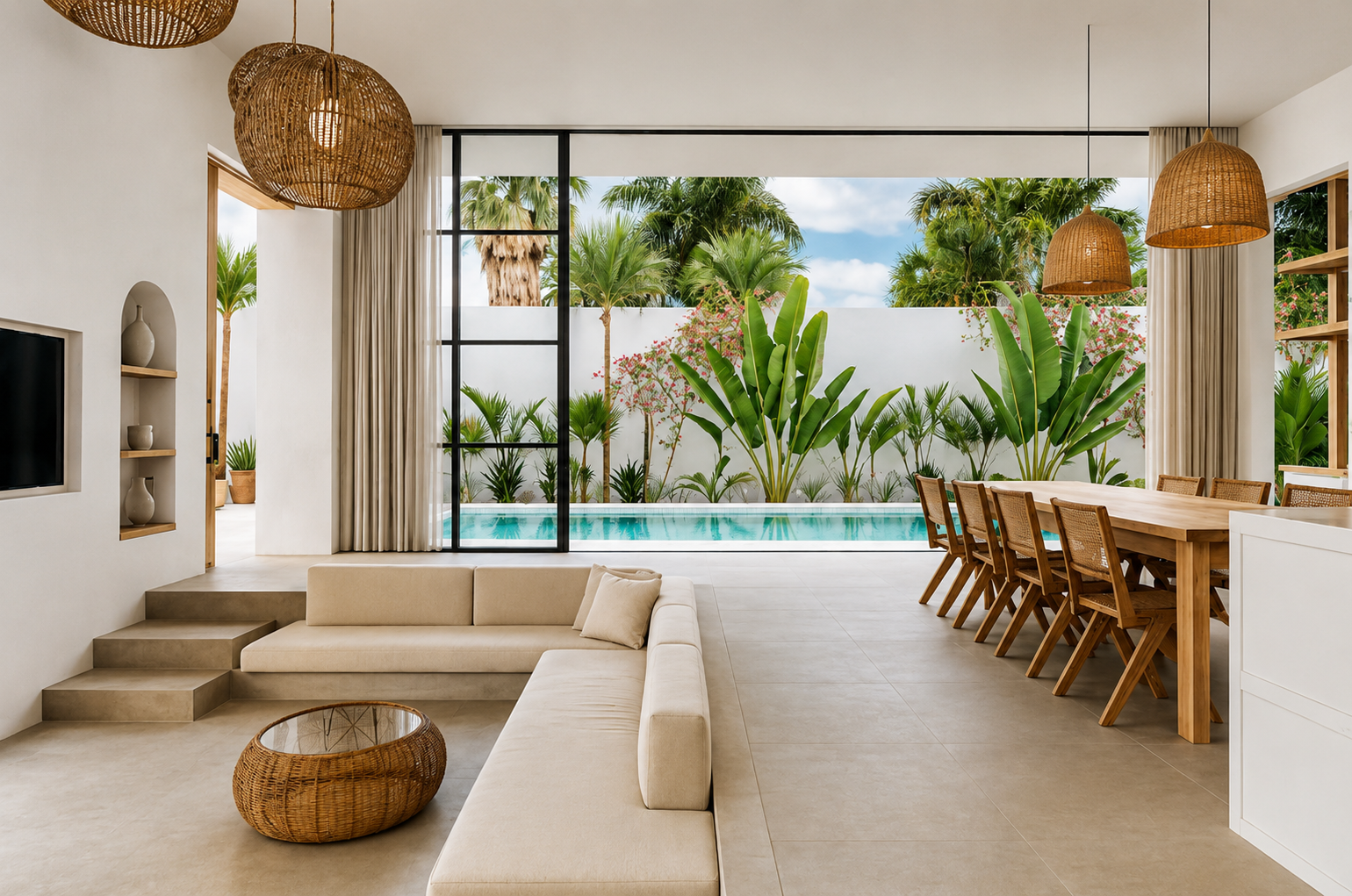
A bright villa interior with tropical views, open dining space, and pool access
As tourism driven destinations continue gaining attention, it is also important to take a step back and look at the full picture. While these markets are becoming an attractive option for some investors, they require a more careful and structured evaluation.
Before entering any tourism real estate investment in the Philippines, investors should carefully review the structure of the opportunity. Unlike traditional city based property, tourism markets are influenced by a wider set of factors that go beyond location alone.
Here are some key areas to consider:
Location and accessibility: How easy it is for visitors to reach the destination plays an important role. This includes proximity to airports, road access, and overall connectivity.
Tourism demand and seasonality: Visitor patterns may vary depending on the time of year. Understanding how demand shifts can help provide a clearer view of how a property may perform over time.
Development timeline: The stage of the project can influence both timing and expectations. Investors often look at how long a development may take to complete and how it aligns with market conditions.
Operator or management structure: In hospitality focused developments, management plays a key role. A well planned structure may support consistent guest experience and day to day operations.
Project positioning: How a development is designed and presented within the market matters. This includes concept, target guests, and how it fits into the surrounding destination.
Legal and ownership structure: Clear documentation and structure are essential. Investors typically review ownership terms, agreements, and compliance with local regulations.
Projected returns and assumptions: Projected returns should be studied alongside market assumptions, operating costs, and tourism demand. These projections are not guarantees, but part of a broader evaluation.
Long term destination planning: The future direction of the destination can influence how a project evolves. This includes infrastructure, tourism strategy, and overall development planning.
When viewed together, these factors highlight that tourism real estate investment in the Philippines is not only about selecting a location. It involves understanding how a development operates within a hospitality environment and how different elements come together over time.
For those exploring Philippines property investment, this approach encourages a more balanced perspective. A well positioned opportunity should be evaluated with both potential and risk in mind, especially within the broader landscape of real estate investment in the Philippines where tourism driven markets continue to evolve.
Are Tourism Markets the Future of Real Estate Investment in the Philippines?

An aerial view of a tropical island destination with clear waters, boats, and active visitor movement
Tourism markets may continue to play a larger role in how investors evaluate real estate opportunities in the Philippines. As travel demand, destination visibility, and hospitality activity evolve, more investors are beginning to include these locations in their overall strategy. This is where tourism real estate investment in the Philippines starts to expand beyond niche interest and become part of a wider discussion.
At the same time, it is important to keep the perspective balanced. Metro Manila will likely remain a key part of the property landscape, supported by business activity, infrastructure, and long established demand. Rather than replacing Metro Manila, tourism driven destinations can offer a different investment profile, one that is shaped by visitor activity and hospitality focused accommodation.
For some investors, this shift is less about choosing one over the other and more about diversification. Looking at both urban and tourism markets allows for a broader view of how different types of properties perform under different conditions. It also reflects a growing understanding that real estate investment in the Philippines is not limited to a single type of market or location.
Within this evolving landscape, destinations like Siargao Island are becoming increasingly relevant to watch. For investors studying Siargao real estate investment, the focus often returns to key fundamentals such as location, guest demand, and how developments are positioned within the tourism environment.
In this context, villa development concepts continue to represent a distinct approach. These villa developments are designed as hospitality focused commercial assets, not residential housing. They are part of a broader ecosystem of guest use properties and commercial villa units for short term stays, aligned with how tourism driven markets function.
As the market continues to evolve, the role of tourism destinations will likely remain an area of ongoing observation. For investors, the goal is not to follow trends blindly, but to understand how each opportunity fits within a long term perspective, especially in markets influenced by travel, demand, and development planning.
FAQs
Why Is Professional Management Important For Guest Use Properties?
Professional management can help support day to day operations, guest coordination, maintenance, and service quality. For hospitality focused commercial assets, the management structure may influence how the property is positioned within the tourism market.
What Role Does Design Play In Hospitality Focused Villa Development Concepts?
Design can influence how a guest uses property fits within the destination and how it supports the visitor experience. In tourism markets, investors may consider whether the design aligns with hospitality use, operational needs, and the expectations of short term guests.
Why Is Siargao Gaining Attention In Tourism Real Estate Discussions?
Siargao is gaining attention because of its tourism visibility, natural appeal, and growing interest from travelers and investors. For those studying Siargao real estate investment, the focus is often on guest demand, location, development quality, and long term positioning.
What Should Investors Avoid When Studying Tourism Real Estate Investment In The Philippines?
Investors should avoid rushed decisions, unclear structures, unrealistic return expectations, and limited market research. It is important to study the opportunity carefully, including location, legal structure, projected assumptions, and how the development fits within the tourism market.
Exploring Tourism Driven Property Opportunities In The Philippines?

A refined villa development concept with a private pool, tropical landscaping, and open indoor to outdoor spaces
As you explore different directions within real estate investment in the Philippines, tourism driven markets may start to stand out as part of a broader investment perspective. Understanding how these opportunities are structured can make a meaningful difference in how each decision is approached.
Dolce Development Group offers insight into villa development concepts in Siargao Island, designed as hospitality focused commercial assets, not residential housing. For investors studying tourism real estate investment Philippines and hospitality real estate Philippines, the focus often comes down to location, structure, and how each development fits within a growing tourism environment.
Rather than rushing into decisions, taking the time to understand how guests use properties and commercial villa units for short term stays can help create a clearer and more balanced investment view. This is especially relevant for those exploring Siargao real estate investment as part of a long term strategy.
Looking to better understand how tourism driven developments are structured in today’s market?
